
How Much Does Asset Management Video Production Cost?
Last updated on 12th November 2026

Accoring to our research, asset management video production prices can range from roughly £900 for tightly defined, high volume content to £70,000+ for a premium level brand film or complex multi-location production.
For a professional interview, educational animated explainer or corporate film, expect to pay between £4,000 and £15,000, depending on the scope.
Our packages start at £5,000 for an animated investor explainer and £8,000 for a filmed investor explainer, and we also offer custom quotes for special projects.
That’s the short and surface level answer. The long and more important answer is that the cost of asset management video production depends far more on what has to happen before, during and after filming, or animation, than on the length of the final video.
A 90-second animated fund explainer is not the same product as a 90-second highlights film shot across three offices.
Likewise, a five-minute portfolio manager interview filmed in one location is not directly comparable with a brand film involving a creative concept, actors, several locations and weeks of post-production.
If you’re in the middle of building a budget and every supplier seems to price video differently, you’re not imagining it.
Our research of 37 specialist and adjacent suppliers found published prices at some firms, indicative guidance at others, and no numerical public pricing at more than half of those reviewed.
The practical way through this is to stop asking, “How much does a video cost?” and start asking, “What production am I actually buying?”. This guide will help you understand what to look for.
What is a realistic asset management video production cost?
For your initial budget planning, the below table shows useful market bands.
These ranges come from published supplier figures in our October 2026 research. Some figures were supplier prices, while others were indicative market guidance.
Our research found that inclusions such as travel, VAT, licensing and revision rounds vary.
← Swipe to see the full table →
| Type of production | Indicative budget | Typical example |
|---|---|---|
| Tightly defined or high volume content | Approximately £900 / $1,000 to £5,500 per deliverable | High volume video, remote production, short animation |
| Professional interview, explainer or single corporate film | Commonly £4,000 / $5,000 to £15,000 / $20,000 | Portfolio manager interview, explainer, company film |
| Brand film, multi-location or substantial campaign | Commonly £15,000 / $20,000 to £70,000+ | Premium brand storytelling, documentary, multi-location work |
| Ongoing specialist content partnership | Approximately £3,000 to £12,000 per month | Recurring filming, animation, YouTube or managed content |
| Larger annual programme | Approximately £80,000 to £132,000+ per year | Premium annual campaigns or specialist filmed partnerships |
Source: Keystone Media research of published video production pricing, October 2026. These figures are indicative market benchmarks, not like-for-like quotations.
Why do asset management video production costs vary so much?
The biggest misconception is that you are paying for minutes of finished video.
But you are paying for people, time, judgement, production complexity and the finished product.
Think about a portfolio manager interview.
The finished film might last three minutes. But before those three minutes exist, someone may need to:
• understand the investment strategy
• turn technical material into a usable narrative
• prepare interview questions
• help the portfolio manager feel comfortable on camera
• arrange a crew and equipment
• film for half or a full day
• edit the interview
• select and add b-roll footage
• create charts and motion graphics
• add compliance wording
• make amendments
• add captions
• add sound effects and music
All the above elements are interchangeable and that’s why two three minute videos can have completely different prices.
Curious about seeing how a specialist approaches asset management video production? View Keystone Media’s portfolio.
How much does strategy and scriptwriting add?
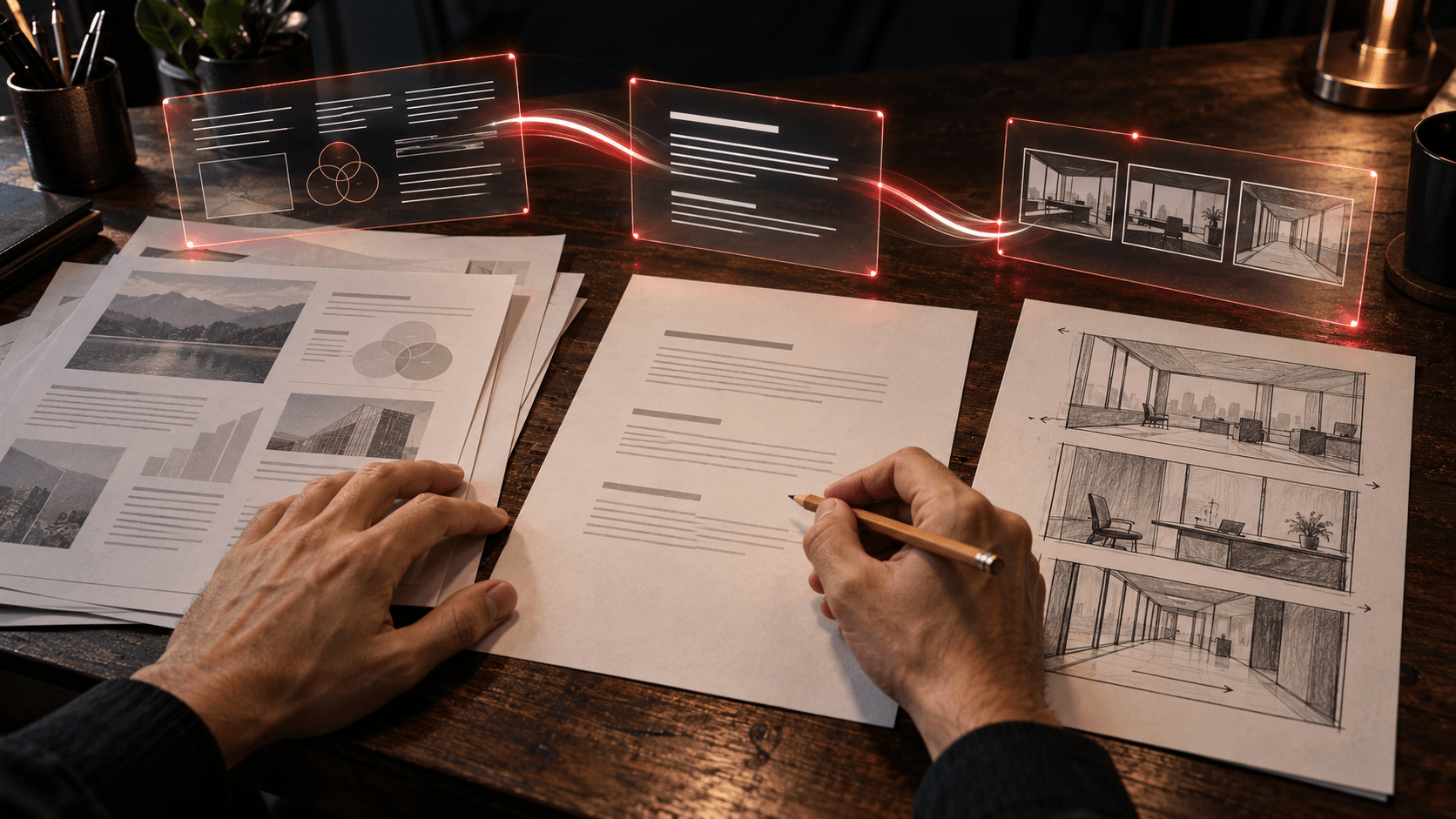
Depending on which video production company you speak to, the strategy and script development may or may not be included in the price. Our investor explainer packages include a creative briefing and finance specialist script development.
Strategy and scriptwriting can be a significant part of asset management video production cost because financial subjects often need more editorial work than other content types.
A fund explainer cannot simply sound polished. It has to be accurate.
Imagine you are explaining a private markets strategy.
Your source material may include a 30-page presentation, product literature and comments from investment, marketing and compliance teams.
Someone has to turn that into a script an investor can follow without stripping out the important nuance.
That’s very different from receiving an approved 200-word script and being told to animate it.
When comparing financial video production services, ask whether writing is included and how much involvement the agency expects from your team.
How much does filming cost?
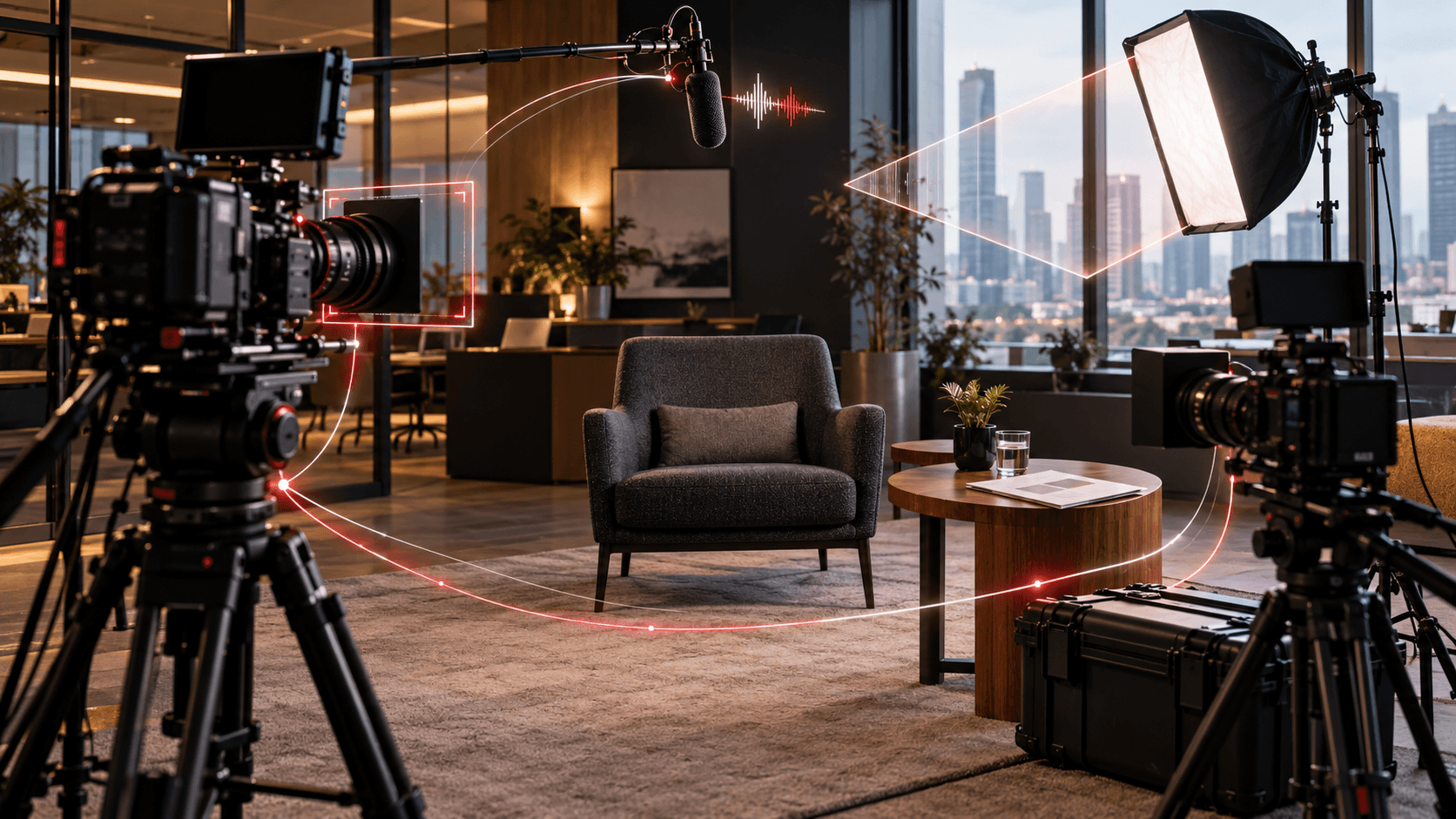
Filming cost depends mainly on the number of shoot days, crew, equipment and locations.
An expert interview in your London office might require:
• one location
• a compact crew
• cameras, lighting and sound
• one filming day
• simple office b-roll, meaning supporting footage of the expert and environment
A more ambitious film might require several offices, a larger crew, extra lighting, specialist equipment, travel or multiple filming days.
That difference can move the budget quickly.
How much do animated financial explainer videos cost?

Animated videos can range from relatively inexpensive template-led production to substantial bespoke projects.
Our research found examples ranging from a few thousand pounds or dollars for fixed animation packages to significantly higher figures for more involved financial explainers.
A template animation is similar to furnishing a flat from a fixed catalogue. You choose from things that already exist.
Bespoke animation is closer to having the furniture made for the room.
Both can be useful. They are simply different products.
For an asset manager, bespoke animation becomes more important when your visual language, investment proposition or audience does not fit generic illustrations.
If you need to explain a fund structure, portfolio construction process or private equity concept, the visual treatment should be designed around the idea rather than pulled from a stock library.
Is animation cheaper than filming?
Sometimes, but cost should not be the main reason to choose between them.
A simple animated video can cost less than a multi-location filmed production. Equally, detailed custom designed animation can cost more than a simple expert interview filmed in one office.
The better question is:
Which format will best help your audience understand and trust the message?
For asset and wealth managers, animation is the stronger option when the subject is difficult to explain visually.
Filming is noramlly stronger when the person delivering the message is part of the reason the audience should believe it.
Animation vs filming: pros, cons and best use cases
← Swipe to see the full table →
| Format | Pros | Cons | Best suited to asset & wealth managers when… |
|---|---|---|---|
| Animation | Makes abstract or technical ideas visible; gives you complete control over what appears on screen; can simplify processes, structures and data; does not require executives to spend a day filming. | Bespoke animation can take significant design time; late changes can become more involved once animation has started; less effective when personal credibility is central to the message. | You need to explain a fund structure, investment process, private markets concept, portfolio construction approach, VCT, co-investment proposition or another complex financial idea. |
| Filmed expert interview | Puts a real person behind the strategy; helps communicate expertise, conviction and personality; particularly useful for thought leadership and market commentary; one shoot can create several shorter edits. | Requires access to the right spokesperson; filming brings location, scheduling and crew considerations; some speakers need preparation to perform naturally on camera. | The portfolio manager, CIO, partner or investment expert is an important part of the story and your audience wants to hear directly from them. |
| Hybrid: filming + animation | Combines human credibility with diagrams, charts and visual explanation; can make technical interviews easier to follow; gives editors more options for keeping longer films visually engaging. | Usually involves more production work than either a simple interview or simple animation; needs careful planning so the graphics support rather than overwhelm the speaker. | You need an expert to explain a complex strategy, product or market view while graphics clarify the parts that are difficult to communicate through speech alone. |
When is animation the better choice for asset managers?

Animation is particularly useful when the thing you need to show does not physically exist.
You can’t film diversification.
You can’t point a camera at a private equity J-curve, a portfolio construction process or the relationship between several parts of an investment strategy.
You have to represent those ideas.
That is where animation earns its keep.
Instead of asking an investor to hold several abstract ideas in their head at once, you can introduce them one at a time using diagrams, typography, charts and animation.
For example, Keystone Media created animated explainer videos for Maven Capital Partners to help investors understand private equity-related products.
Maven’s case study says the aim was to add an educational layer to its communications, because products involving technical language, layered structures and regulatory nuance can be difficult to explain through text alone.
Animation gave the team a way to simplify those concepts visually.
Another example is Keystone Media’s animated explainer for UBS O’Connor.
The challenge was to explain the history and strategy of a specialist multi-strategy hedge fund platform without relying on a list of facts and figures.
A timeline-style animation turned that information into a more structured narrative for a sophisticated investment audience.
Animation is therefore a strong choice for explaining funds, investment processes, portfolio construction, economic or market scenarios, and other complex financial concepts that would otherwise rely on dense presentation slides.
When is filming the better choice for asset managers?

Filming is better when the person matters as much as the information being communicatied.
A prospective investor may not only want to know how your strategy works.
They may want to hear how the portfolio manager thinks.
They may want to see the CIO explain a market view.
Or they may want to hear directly from the partner responsible for an investment.
In those cases, replacing the person with animation could remove one of the most valuable parts of the communication.
A filmed expert interview is therefore well suited to:
• market outlook videos
• portfolio manager commentary
• thought leadership videos
• investment team introduction videos
• CEO or partner interviews
• portfolio company stories
• AGM videos
• client or investor update videos
Filimg video footage can also be more efficient than it first appears.
If you plan the shoot properly, one interview session can produce a main video plus several shorter clips for LinkedIn, email, presentations and other channels.
When should you use both?

In our opinion, the best option for an asset or wealth manager is a combination of animation and filming, rather than either one alone.
Imagine a portfolio manager explaining a private credit strategy.
The manager appears on screen to provide expertise and credibility, make eye contact, and build that all important trust.
When they start explaining how capital moves through the strategy, the video cuts to a simple animated diagram.
When they discuss portfolio construction, graphics appear beside them.
When they return to the investment philosophy, the audience sees the expert speaker again.
This is far more effective than forcing one video format to do everything.
It also reflects how financial audiences consume information. Some parts of the story need a human voice. Other parts need a picture.
So, how should you decide?
Use this simple rule:
Choose animation when the idea is the star.
Choose filming when the expert is the star.
Choose a hybrid video production when the audience needs both the expert and a visual explanation.
Don’t choose animation because somebody told you it’s cheaper.
And don’t choose filming simply because “video” automatically makes people think of cameras.
Choose the format that removes the biggest barrier to understanding and trust building (and fits your budget).
Does asset management video production cost more because of compliance?

Sometimes, but I would frame the issue differently.
Compliance does not automatically make a camera, editor or animator more expensive but compliance emphasises the need for a clean and structured production process.
For UK financial promotions, the FCA says promotions must be fair, clear and not misleading regardless of the media used. The rules can also require a balanced presentation of benefits and relevant risks.
That makes approvals important.
A storyboard might be approved by marketing and then need a change after compliance reviews how an investment concept has been represented.
A chart may be technically correct but create the wrong impression visually.
A phrase that works in a presentation may need more context in a 30-second social edit.
And these aren’t theoretical problems. Questions about amendment rounds, storyboard approvals, and compliance changes appear repeatedly in our conversations with asset managers.
So when assessing the cost of asset management video production, do not only ask what the first version costs.
Ask:
How are compliance changes handled?
A lower initial quote becomes much less attractive if every extra amendment creates another invoice.
What should be included in an asset management video production quote?
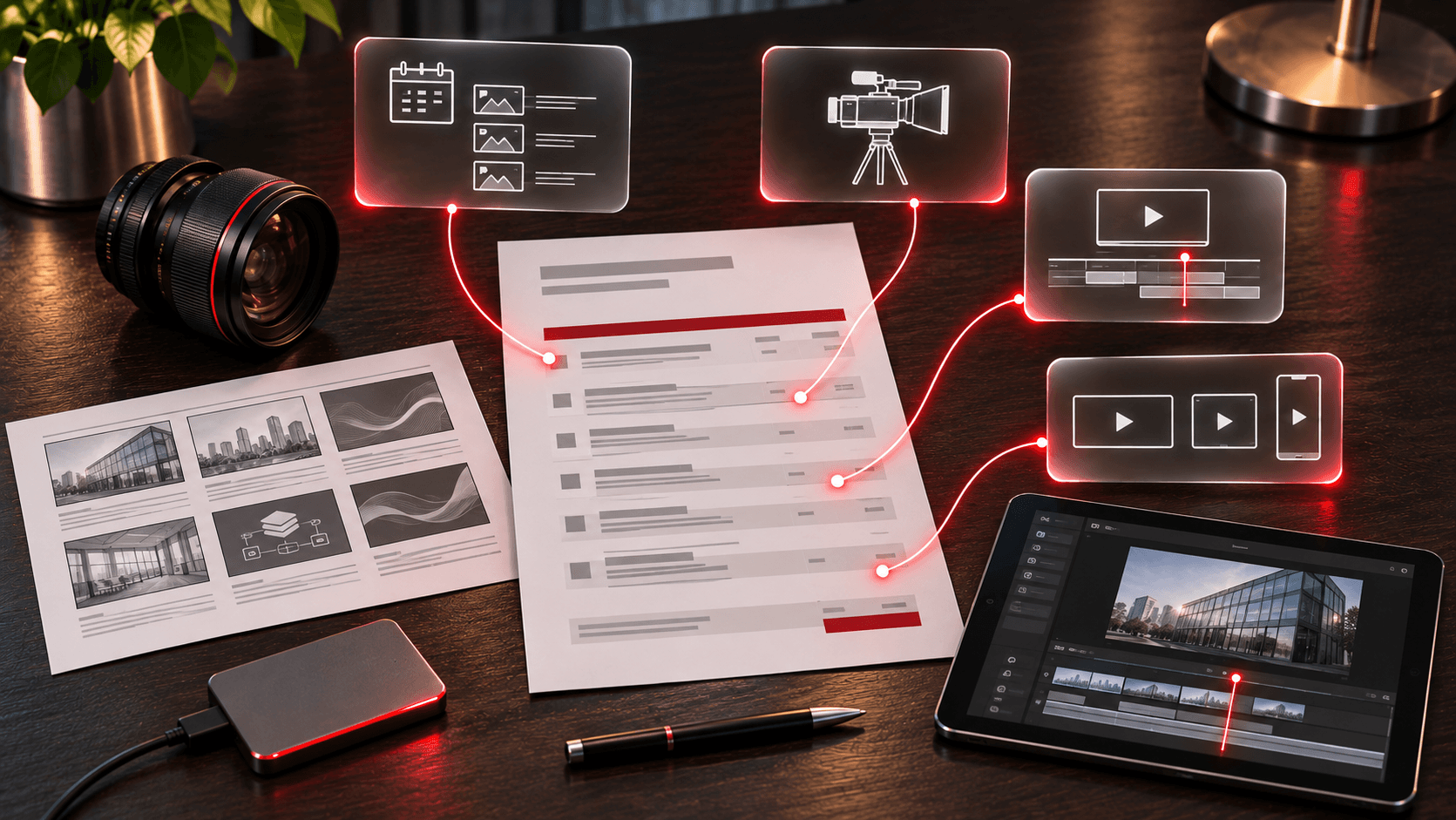
At minimum, the quote should make the boundaries clear. You should understand:
Pre-production
Does the price/quote cover:
• briefing
• research
• creative direction
• scriptwriting
• interview preparation
• storyboards
• shoot planning
• project management
Production
Does the price/quote cover:
• crew
• cameras
• lighting
• sound
• studio or location costs
• travel
• autocue
• make-up
• actors or presenters
• b-roll
Post-production
Does the price/quote cover:
• editing
• animation
• motion graphics
• charts
• sound design
• music
• colour grading
• subtitles
• human or AI voiceover
• stock footage
• compliance amendments
Final Deliverables
Does “one video” mean literally one video file?
Or are you getting:
• a master film
• social media cutdowns
• square or vertical versions for Meta, LinkedIn etc.
• captioned versions
• multiple language versions
• editable project files
• liscening for paid advertisements
A cheap quote for one master file is not directly comparable with a quote that creates ten usable video assets.
Why do some financial services video agencies not publish prices?

Because alot of video projects genuinely cannot be sensibly priced before the scope is known.
Of the 37 specialist and adjacent suppliers we researched and reviewed; thirteen published direct prices, starting prices or working ranges, four published indicative guidance, while 20 showed no numerical public pricing and required an enquiry or bespoke quote.
That doesn’t prove that quote only agencies are more expensive, it just tells you that their pricing model always depends on the brief.
There is a reasonable argument for bespoke quoting when you are making a global brand film involving several countries.
I’m less convinced that a buyer of video production services should have to endure three meetings simply to discover the approximate cost of a standard 90-second animated video.
For repeatable financial video production services, like expert interviews, published pricing saves both sides time and energy.
For genuinely unusual work, custom pricing makes sense.
Should I tell a video production company my budget?

Yes.
Some marketers worry that revealing a budget means the video agency will simply charge up to it.
A good video agency should instead tell you what is realistic at that level.
Suppose you have £10,000 for your video production project.
That might fund one highly polished piece, or a simpler master plus several cutdowns.
If your real budget is £5,000, there is little value in spending two weeks discussing a £25,000 treatment.
Your budget is a design constraint.
Architects need to know whether you’re building a garden office or a headquarters. A financial video production company needs similar context.
You can also ask the video agency to show you options.
For example:
£5,000: What can we make and get with this budget?
£10,000: What would you add?
£20,000: What changes materially rather than simply making the same film more elaborate?
What makes asset management video production costs increase?
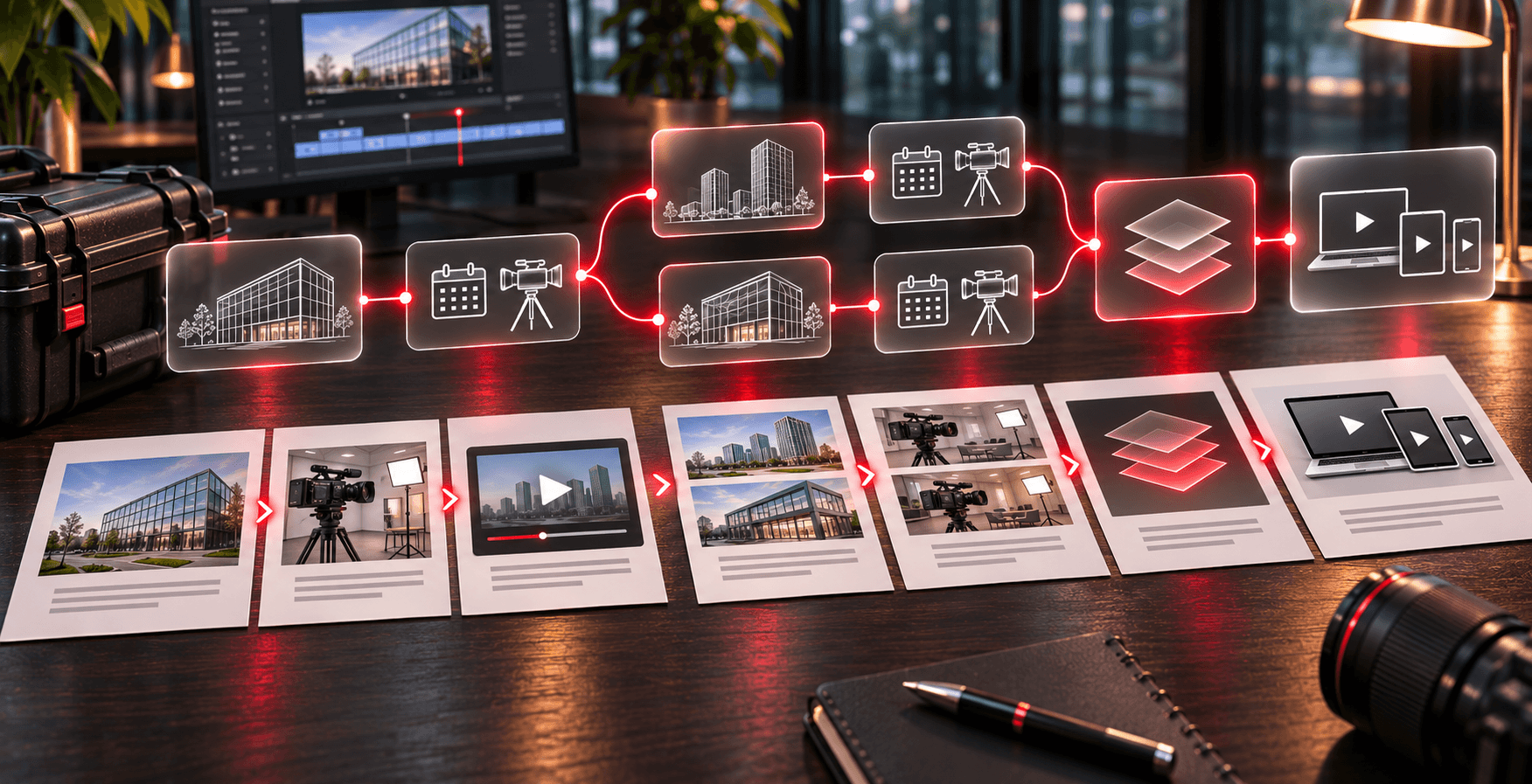
The main cost drivers from our experience and from our market research are:
• strategy and discovery
• script development
• number of filming days
• crew size
• locations
• animation complexity
• executive or portfolio manager preparation
• number of edits and versions
• compliance review and amendments
• subtitles and localisation
• travel
• actors or voiceover
• music and media licensing
• raw-footage or project-file requirements
• ongoing distribution or channel management
Here’s a simple example to show you how quickly these compound.
Imagine an investment firm wants an expert interview.
Version A: one expert, one office, one filming day, one three-minute video.
Now change it to:
Version B: four experts, two cities, three filming days, bespoke animated charts, six social media edits, two languages and several compliance teams.
The final video might last only three minutes, but the production process is completely different, which affects the cost.
Can I reduce asset management video production costs without making the video look cheap?

Yes, 100%.
The best savings come from reducing waste rather than reducing production quality. Here’s how:
Film several pieces at once
If three portfolio managers all need videos this quarter, consider filming them on the same day.
You spread the crew and equipment cost across several assets.
Decide the cutdowns before filming
Do not finish a five-minute film and only then announce that you need six LinkedIn videos.
Plan the shorter pieces from the start.
The producer can capture the right answers and visuals while everyone is already in the room.
Get compliance involved early
An approved script is cheaper to change than a finished animation.
If a chart is likely to cause debate, discuss the principle before the video prodcution company spends two days making it move beautifully.
Use your existing brand system
If your organisation already has brand guidelines, strong design assets, illustrations or motion rules, using them can reduce exploratory work.
Separate “must have” from “nice to have”
A drone shot may look impressive.
It probably won’t help an investor understand a credit strategy.
Spend first on what improves the communication and trust building.
Is a monthly video production partnership cheaper than commissioning individual videos?

When you genuinely need content regularly, it can be.
The published market examples in our research ranged from roughly £3,000 to £12,000 per month for ongoing video content services, although the exact outputs differed substantially.
A recurring model can make sense if your team regularly produces:
• market commentary
• fund updates
• expert interviews
• thought leadership
• event videos
• short social content
• animated explainers
The advantage is not only a lower theoretical price per asset.
Your video production partner gradually learns your brand, stakeholders and approval process. They become a member of your team without the admin.
That can remove repeated briefing work and inconsistent video quality from collaborating with various agencies.
However, a video retainer is poor value if you do not have enough useful things to say.
Don’t buy a “content engine” simply because it sounds efficient.
That said, asset and wealth management firms do need to build reliable content engines if they want to compete in this increasingly digital first world.
Before making a purchasing or investment decision, most people go through a research journey. They read blogs, they watch videos, they compare and look for evidence before they act.
The firms that win the most attention and trust will be the ones that consistently produce the most useful and educational content.
Particulary video content.
But that’s a conversation for another post.
How should I compare asset management video production quotes?
Ask these questions to every video production supplier:
← Swipe to see the full table →
| Question to ask | Why it matters |
|---|---|
| Is strategy and creative development included? | If not, your internal marketing team may be expected to develop the concept, structure and messaging before production begins. |
| Who writes the script? | Fund and investment content often needs substantial editorial work to turn technical information into something investors can understand. |
| How many filming days are included? | Shoot days are a major cost driver. One day in one office is very different from filming several experts across multiple locations. |
| What crew and equipment are included? | “Filming” could mean one camera operator or a larger crew with a producer, director, lighting, sound and multiple cameras. |
| Is the animation bespoke? | Stock graphics, templates and custom motion design are different products. This matters when you need to explain a fund structure, investment process or other complex financial concept. |
| How are revisions and compliance amendments handled? | Investment content can go through several approval cycles. Find out how many revisions are included and what happens if compliance asks for further changes. |
| Are social cutdowns included? | One filming day can potentially create a main film plus several shorter videos for LinkedIn, email, campaigns and other channels. |
| What licensing is included? | Music, stock footage, voiceover and paid-media usage rights can all have different licence terms and additional costs. |
| Are travel and expenses included? | A low headline quote can rise once travel, accommodation, studios, couriers or other production expenses are added. |
| What files will we receive? | Clarify whether you receive only the finished master or also raw footage, clean versions, subtitles, graphics and editable project files. |
| What happens if the scope changes? | Understand exactly where the fixed fee stops and when additional filming, animation, versions or major changes will trigger extra costs. |
How do I build a video budget before I have a detailed brief?

Use this framework to help you.
First: clearly define the work
Finish these sentences:
1. “After watching this video, the audience should understand…”
2. “After watching this video, the action I want the audience to take is…”
If you cannot complete these clearly, do not ask for a quote yet.
Second: choose the main video formats you need
Do you need:
• an animated explainer
• a filmed expert interview
• a hybrid of film and animation
• a brand film
• an event video
• a recurring content programme
• All the above?
Third: set the video production boundary
Write down:
• approximate duration
• number of people appearing
• number of locations
• filming countries
• whether scripting is needed
• animation requirements
• compliance process
• number of final versions
• any assets you’ll be providing like your own stock footage
• deadline
Fourth: identify the reusable outputs
Ask what else should come from the same production.
Could the interview also create three one minute clips?
Could the animation provide still graphics for presentations?
Could an animated financial explainer video also be used by distribution teams during meetings?
Fifth: set a realistic budget band
You do not need an exact figure.
Even “£5,000 – £10,000” is much more useful to the video production company than “we have no idea”.
An asset management video production cost checklist
Before you approve a quote, go through this checklist. If several of these points are unclear, the headline price probably isn’t giving you the full picture.
Conclusion: what should you actually budget?
As you can see, there is no single correct cost for asset management video production, unless a provider offers ready-made packages.
For planning purposes, the public market evidence we’ve reviewed suggests roughly £4,000 – £15,000 is a sensible starting range for many professionally produced interviews, animated explainer videos and individual corporate films, while simpler standardised content can cost less and ambitious brand, campaign or multi-location productions can cost a lot more.
What matters is what the price includes.
Look at the thinking, experience, filming or animation, compliance process, revision terms and final deliverables.
We at Keystone Media specialise in video production and animation for asset and wealth managers, with published fixed pricing for defined animated and filmed Investor Explainers and custom quotes for work outside those formats.
You can view our current video production pricing packages or browse our asset and wealth management video portfolio to see the level and type of work those budgets can produce for you.
Frequently asked questions about asset management video production costs
How much should an asset management firm budget for a professional video?
For a professional interview, explainer or single corporate film, a sensible planning range is around £4,000 to £15,000, based on the published supplier data reviewed for this article.
Simpler and more tightly defined content can cost less. Premium brand films, multi-location video productions and larger campaigns can cost substantially more.
The key is to compare the scope behind the price, not just the headline price itself. Ask what’s included.
How much does an animated fund explainer cost?
Animated fund explainer videos can vary widely depending on design complexity, duration, scripting and the number of revisions required.
Keystone Media currently publishes a price of £5,000 + VAT for its defined animated Investor Explainer package.
More complex animation, additional versions, localisation or work outside the standard scope would usually require a separate quote.
How much does a filmed expert interview cost?
A filmed expert interview can range from a relatively simple one location shoot to a much larger production involving several experts, multiple cameras, multiple locations, animation and social cutdowns.
Keystone Media currently publishes a price of £8,000 + VAT for its defined filmed Investor Explainer package.
The final cost depends on factors such as filming days, locations, crew size, graphics and the number of deliverables.
Why do asset management video production quotes vary so much?
Because two suppliers may be quoting for very different amounts of work.
One quote might cover filming and editing only. Another might include strategy, scripting, executive preparation, animation, compliance amendments, subtitles and several social cutdowns.
That is why asset management video production cost should always be compared against the exact scope.
Is animation cheaper than filming for an asset manager?
Sometimes, but not always. A simple animation can cost less than a multi-location filmed production. Equally, a detailed bespoke animation can cost more than a simple expert interview filmed in one office.
For asset and wealth managers, the better question is which format best explains the subject. Animation is typically stronger for breaking down and explaining abstract financial concepts, while filming is stronger when the expertise and credibility of the person speaking matters.
Are compliance amendments normally included in the price?
It depends on the video production supplier.
Some video production companies include a fixed number of revision rounds. Others charge for additional amendments. Keystone Media’s published explainer packages currently state that revisions are not capped within the agreed project scope (except for re-shoots), including compliance amendments.
You should always confirm what happens if compliance requests changes late in the process, because this can affect the final cost.
Is it cheaper to commission several videos at once?
Yes, sometime it is cheaper. If several videos can be planned and filmed together, you may be able to spread the cost of the crew, equipment and production day across multiple assets.
For example, one filming day could potentially create a main expert interview plus several shorter social videos.
The saving depends on the scope, but planning content as a group is often more efficient than commissioning each video separately.